
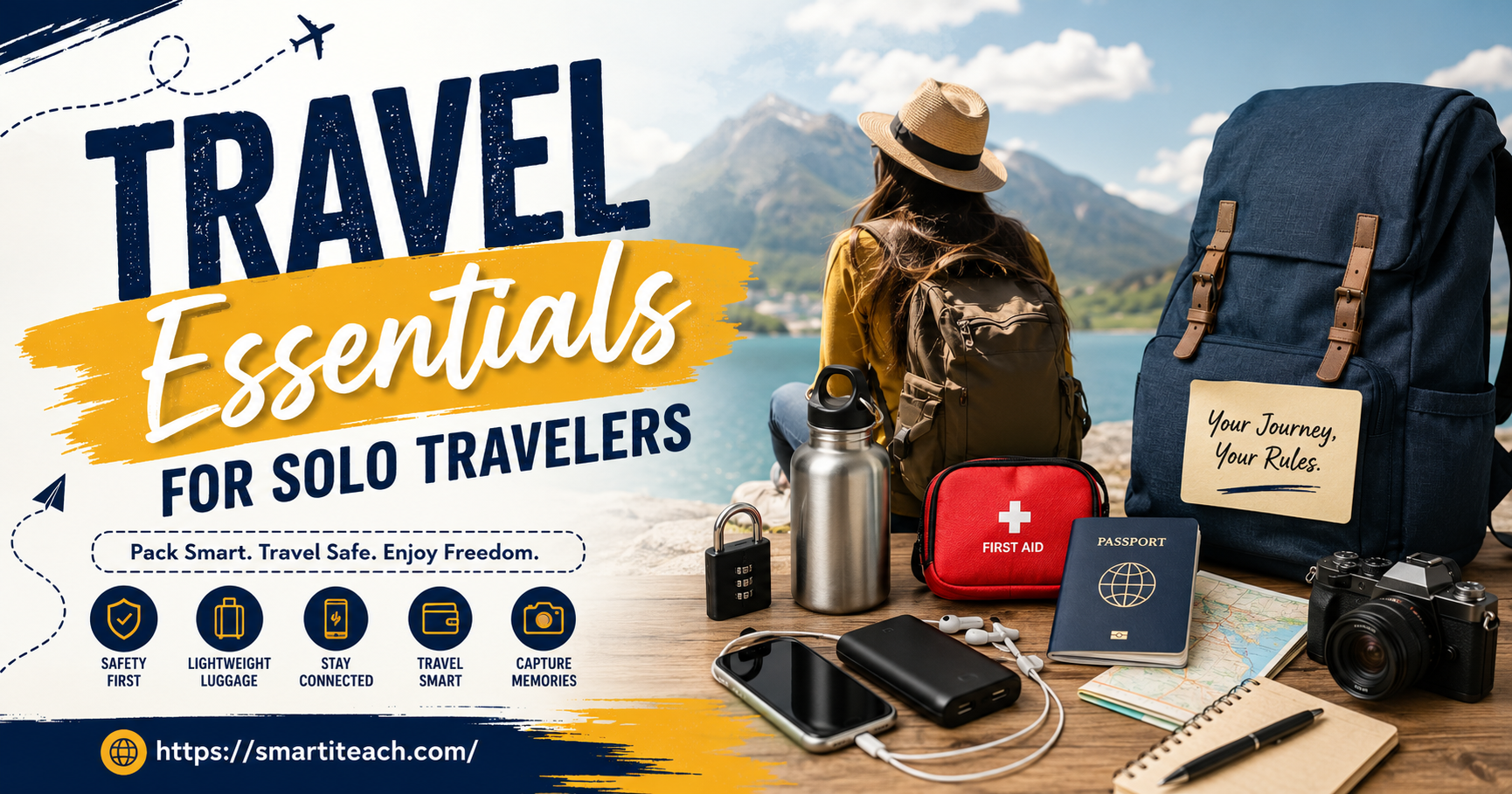

First solo trip, and you’re staring into an open suitcase wondering what actually matters. Nobody to remind you about the charger. Nobody to split the load with when the bag’s too heavy. Nobody handing you half their snacks when the flight’s delayed a third time. Traveling alone changes what’s worth packing, not just how much of it.
Skipping the generic list copied from a dozen other sites. This is what actually earns a spot in the bag when there’s no one else to lean on, and why. Some of it’s obvious once you hear it. Some of it’s the kind of thing you only learn after standing in an airport at midnight wishing you’d packed differently.
A Bag You Can Actually Carry Alone
Sounds obvious. People still get it wrong constantly. Travel with someone, a heavy suitcase is annoying. Travel solo, a heavy suitcase is a real problem, because there’s nobody to help lift it onto a train, hold a door, watch it while you find a bathroom.
Wheels that roll smoothly over cobblestones, gravel, cracked sidewalks, matters more than people think until they’re dragging one through a train station at 6am, half asleep, running late. A daypack that fits under the seat or clips to the main bag saves you juggling two things every time you move. You’re always the one carrying everything solo, so anything that cuts down the physical hassle pays off constantly, not just once.
Worth actually test-packing before the trip too. Fill the bag the way you plan to, carry it up a flight of stairs, across a parking lot. See how it feels fully loaded with nobody behind you offering a hand.
A Charger That Actually Holds a Real Charge
Phone’s not just for photos when you’re alone. It’s the map, the translator, the emergency contact, the hotel booking, sometimes the only way to reach anyone if something goes sideways. Letting it die matters more solo, there’s no one else’s phone to borrow.
Get a power bank that can charge a phone fully at least twice over. Cheap ones claiming big numbers and delivering a fraction of that are everywhere, worth checking real reviews instead of trusting the box. Bring the right cable too, obvious, sure, but people forget this more than you’d think, especially juggling a phone and something else that charges differently.
Worth charging the power bank itself the night before travel days too, not the trip’s first day, every travel day. It’s the kind of habit that takes ten seconds and quietly prevents the one scenario where both the phone and the backup die at the same time.
A Lock That’s Actually Reliable
Hostels, shared dorms, even regular hotel rooms sometimes, locking up your stuff matters more alone, no travel companion watching the bag while you’re in the shower or grabbing food down the street.
Small combination lock for a locker or zipper pulls, does the job, no key to lose. Some solo travelers go further with a portable door lock for hotel rooms, mostly peace of mind in unfamiliar places rather than strict necessity everywhere. Not about assuming the worst. Just one less thing to worry about at 2am somewhere you don’t know well yet.
Doesn’t need to be expensive either. The cheap combination locks sold at basically any pharmacy or hardware store work fine for most situations, the point isn’t military-grade security, it’s just enough of a deterrent that someone walks past your bag instead of digging through it.
Copies of Everything Important, Kept Separate From the Originals
Not glamorous. Still the thing that turns a real disaster into a minor inconvenience. Passport, ID, insurance details, a backup card, all photographed, all saved somewhere that doesn’t depend on your phone actually working.
Email yourself a copy of the passport. Keep a physical photocopy in a different bag than the original. Traveling with someone, they’d normally hold a backup for you. Solo, that safety net doesn’t exist unless you build it yourself. Ten minutes before the trip. You’re grateful for it exactly once, but when you need it, you really need it.
A First Aid Kit Sized for One Person
Doesn’t need to be elaborate. Pain relief, something for an upset stomach, blister plasters, prescription meds with enough supply for the whole trip plus a few extra days in case plans shift.
Traveling with others, someone usually has whatever you forgot. Alone, doubled over with stomach trouble in a country where you don’t speak the language, finding a pharmacy at 11pm is a lot harder than it needs to be if you’d just packed the basics from home. Barely takes up space. One of those things nobody thinks about until they need it and don’t have it.
A Way to Communicate Without Data
Not every destination has cheap, reliable data the second you land, and running dry on connectivity while navigating somewhere unfamiliar alone is its own specific kind of stress. Group travelers usually just borrow someone’s signal. Solo, that fallback isn’t there.
Local SIM or an eSIM set up before departure fixes most of it. Offline maps downloaded ahead of time too, most map apps let you save an area, takes two minutes before landing. Translation app worth having as well, ideally one that works offline, since gesturing wildly at a menu only gets you so far.
Something to Fill the Inevitable Downtime
Solo travel comes with way more waiting alone than people expect. Delayed flights. Long train rides. Meals eaten by yourself. Evenings in a hotel room with nothing scheduled. Not a bad thing exactly, just different from traveling with company, and having something to fill that time makes it a choice instead of something you’re stuck enduring.
Book, downloaded show, podcast, journal, whatever actually holds your attention. Small thing, changes a lot though. Difference between “I’m alone and bored” and “I’m alone and this is kind of nice” usually comes down to whether you brought something to do or just brought your own restlessness along with you.
Some of the best moments of solo travel actually happen in that downtime too, a quiet coffee shop with a book, a slow train ride watching the scenery, if you go in expecting to fill the time rather than dreading it. It’s less about avoiding boredom and more about making sure boredom doesn’t turn into loneliness by default.
A Money Setup That Doesn’t Rely on One Card
Card gets skimmed, lost, or just stops working at a specific machine. Travel companion, you use theirs while sorting it out. Alone, that backup doesn’t exist unless it’s already built in.
Bring at least two ways to pay, different banks ideally, kept in separate places, not both crammed in the same wallet. Small amount of local cash on arrival covers the gap before you find an ATM or figure out how payments actually work there. Not about expecting disaster. Just that solo, one point of failure in how you pay becomes a real problem fast, where with company it’s usually just a minor annoyance somebody else covers for a minute.
Worth calling your bank before you leave too. A card getting flagged and frozen for “unusual activity” while you’re standing at a register somewhere unfamiliar happens constantly, and it’s completely avoidable with a five-minute call or a note in a banking app before you go.
Basic Safety Items That Don’t Take Up Much Room
Varies by destination, and honestly by personal comfort level, but a few things show up on most solo travelers’ lists regardless. Doorstop alarm for hotel rooms in places you’re not fully confident about. A whistle, sounds excessive until you’re somewhere isolated and it genuinely isn’t. Sharing your live location with someone back home for parts of the trip, especially anything remote or late at night.
Not about traveling scared. About traveling smart enough that if something does go sideways, there’s already a small buffer built in instead of figuring it out in the moment with nothing to work with.
Worth researching the specific destination too rather than applying a blanket approach everywhere. What matters in a big unfamiliar city looks different from what matters somewhere remote and rural, and a few minutes reading up on local safety norms before the trip beats guessing once you’re already there.
Clothes That Do More Than One Job
Packing light matters more solo, mainly because you’re the only one carrying it and managing it through every transition, security lines, hostel check-ins, overnight trains. Clothing that works for more than one situation, something that goes from daytime to a slightly nicer dinner, layers that adjust instead of packing a separate outfit for every possible temperature, cuts the bag down significantly.
Less about fashion, more about reducing how much you’re managing at once. Fewer decisions packing and unpacking means more actual mental space for the trip itself instead of logistics eating your attention all day.
A Journal or Notes App You Actually Use
Easy one to skip. Also quietly one of the most valuable things to bring. Solo travel generates a lot of thoughts nobody else is there to hear in the moment, and writing even a couple lines a day, what happened, how it felt, something small that stood out, turns into something genuinely worth having long after the trip’s over.
Doesn’t need to be a beautiful leather journal. Notes app works fine. Not about the format, it’s about having somewhere to put the parts of the experience that would otherwise just evaporate by the time you’re home and someone asks how the trip was and you can barely remember the details.
Final Thoughts
Solo travel isn’t group travel with fewer people in it. It changes what’s actually essential to bring. Every item here earns its place because there’s no one else to fall back on if it’s missing, no shared bag, no borrowed charger, no second opinion when something goes wrong.
None of it means overpacking or overthinking. Mostly it’s about closing the small gaps a travel companion would normally cover without you even noticing they were covering them. Pack for the trip you’re actually taking, not a worst case, but build in enough of a buffer that if something does go sideways, you’re not stuck with nothing to work with. That’s really the whole difference between a stressful solo trip and one that just feels like freedom.



[…] a while I thought “eco-friendly packing” just meant buying new stuff with a leaf stamped on it somewhere. Bamboo toothbrush. Bamboo […]
[…] just hello and thank you. Learn “I need help.” “Where’s the nearest hospital.” “Call the police.” Most people only learn the polite ones and skip these […]