
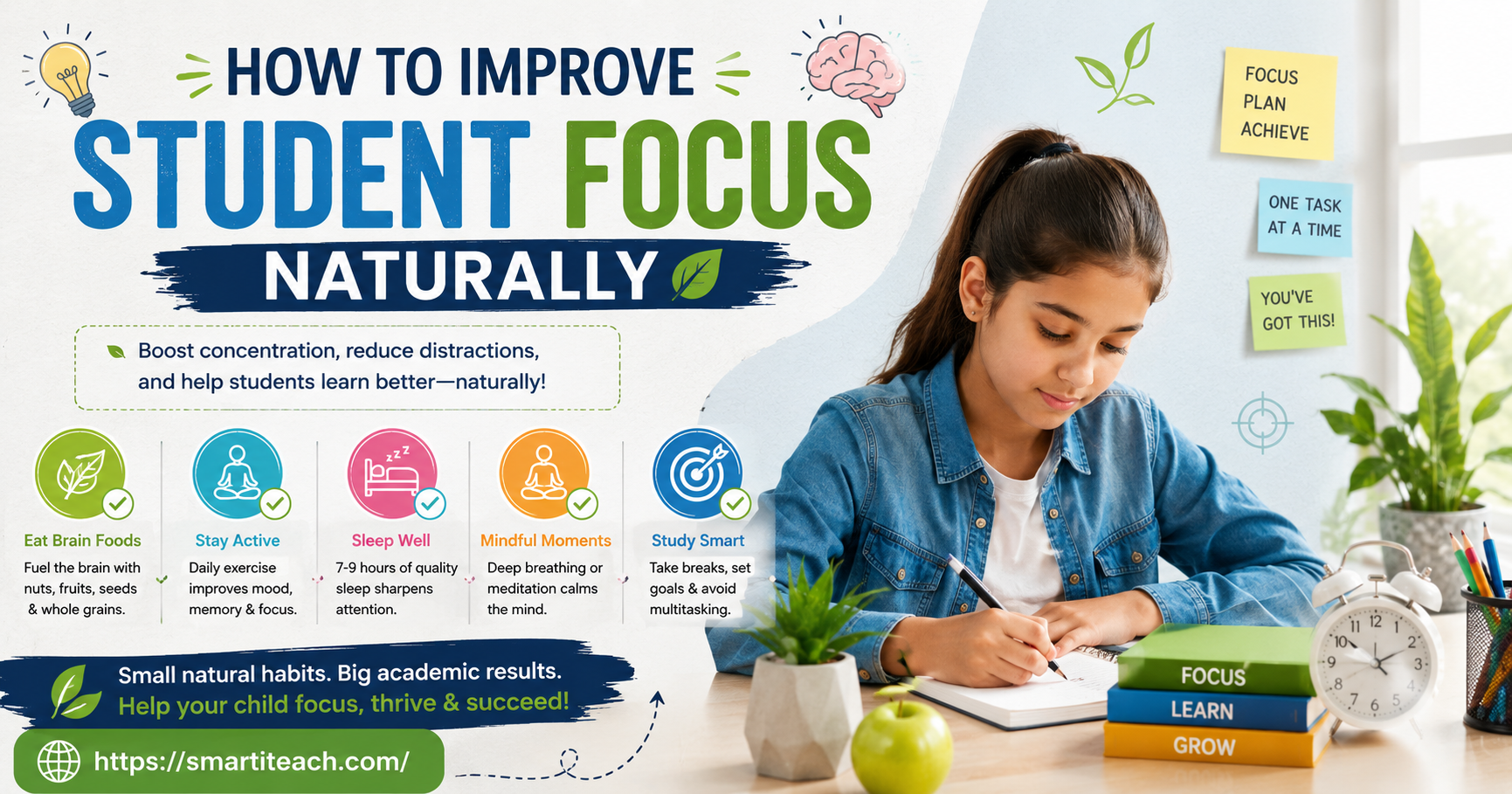

You know the look. Kid’s got a pencil in hand, staring at a math problem, and they’re just… not there. Not lazy. Not being difficult on purpose. Just gone somewhere between the page and the window.
First instinct a lot of parents have is to reach for an app, a supplement, some productivity trick with a name that sounds like a startup pitch. Most of that’s noise. What actually helps is way simpler than that, and honestly has less to do with the desk than you’d think.
Sleep, First, Before Anything Else
Gonna say this straight up. If a kid’s not sleeping enough, nothing else here is gonna do much. Focus needs a rested brain to run on, and a tired one just doesn’t have the fuel, no matter how good the study setup looks.
Teenagers get hit hardest by this. Their internal clocks actually shift later during adolescence — it’s not attitude, it’s biology — so an early school start is fighting against them from the jump. Younger kids need more sleep than most parents guess too, somewhere around ten to twelve hours depending on the age.
Bedtime staying roughly the same, even on weekends, matters more than hitting some exact hour count. Bodies like rhythm more than they like precision. Eight hours at a different time every night, versus seven and a half at a fixed time — the second one usually wins for focus.
Morning Light Does More Than You’d Guess
Sounds too simple to be real, but there’s something to it. Getting outside in daylight not long after waking helps set the body’s clock for the whole day, which shows up as alertness hours later. Kid who walks to school, or just steps outside for a few minutes first, tends to show up more switched-on than one who goes bedroom to car to classroom in the dark.
Indoor school lighting isn’t doing anyone favors either. A desk near a window, blinds open, genuinely helps more than people give it credit for.
Move First, Focus Second
Ask a kid to sit still for six hours and then concentrate hard right after, and you’re asking for something bodies just aren’t built for. A short burst of movement before something that needs concentration — five, ten minutes of walking, stretching, jumping around, whatever — tends to sharpen attention right after.
Not just a guess either. Movement bumps blood flow and a few brain chemicals tied to alertness. Schools that build in short movement breaks between lessons often see better attention in the class right after, compared to ones that just push straight through.
Same thing applies at home for a longer homework stretch. A quick walk before sitting down beats going straight from a screen into study mode.
Food That Doesn’t Spike Then Crash
Kid running on sugar and simple carbs focuses in short intense bursts, then crashes hard. Not a steady stretch of attention, more like a rollercoaster. Some protein and fiber alongside the carbs keeps blood sugar steadier, and steadier blood sugar tends to mean steadier focus too.
Breakfast matters more than people assume, honestly. Skipping it, or just grabbing something basically made of sugar, tends to show up as restlessness by mid-morning. Doesn’t need to be complicated. Eggs, oatmeal, fruit with some nut butter — does the job fine.
Water too, more than it gets credit for. Even a little dehydration measurably knocks concentration and mood down. Dehydrated kid isn’t focusing well no matter how quiet you make the room.
Less Background Noise, Less Clutter
A messy desk or a noisy room makes the brain do extra filtering before it even gets to the actual task. That filtering is invisible, but it’s real, and it eats into attention that should be going toward the homework.
Doesn’t mean total silence is required though. Some kids genuinely focus better with a bit of background noise — soft instrumental stuff, white noise — over dead quiet. What actually hurts focus is unpredictable noise. Conversations nearby, a phone buzzing every few minutes. It’s the unpredictability doing the damage, not sound itself.
Clear desk with just what’s needed for the next twenty minutes helps more than people expect. Not a full organizing overhaul. Just clear the stuff that isn’t needed right now.
Short Bursts Beat Long Grinds
Asking a young kid — honestly a lot of adults too — to focus hard for a full hour straight sets things up to fail. Attention comes in waves naturally. Forcing a flat, sustained stretch of it usually backfires into daydreaming partway through.
Shorter stretches with a real break between hold up way better. Something like twenty, twenty-five minutes focused, then a five minute break, works for a lot of students. And the break needs to actually be a break. Not switching to a different screen. Standing up, stretching, water, staring at something far away for a minute — all fine. Scrolling a phone during the break doesn’t really count as resting, since it’s still pulling attention rather than letting it recover.
Phones Are the Big One
Obvious, but worth saying because it’s probably the single biggest attention drain going right now. Phone sitting on the desk, even face down, even silenced, still pulls at attention just by being visible. Brain spends effort actively resisting the urge to check it, and that effort comes straight out of whatever attention budget was supposed to go toward the actual task.
Phone in another room during focused work beats face-down-nearby. Out of sight genuinely means less mental tug toward it.
Fresh Air During Breaks
Stepping outside for even a few minutes during a break tends to refresh attention more than staying indoors under fluorescent lighting. There’s research on this, sometimes called attention restoration — time around trees, grass, open sky, seems to help the brain recover from the kind of directed attention that wears thin over a school day.
Doesn’t need to be a hike through the woods. A short walk around the block, or just sitting outside for the length of a break, seems to genuinely help kids come back sharper than they left.
A Routine That Doesn’t Change Much
Kids focus better when they’re not burning mental energy figuring out what happens next. A loose, predictable daily rhythm frees up attention that would otherwise go toward uncertainty about the schedule.
Doesn’t mean rigid, minute-by-minute planning. Just a general shape that stays roughly the same. Same rough wake time, same rough homework window, same rough bedtime. Kids who roughly know what’s coming settle into focused work faster than ones figuring out the shape of the day as they go.
One Thing at a Time, Actually
Multitasking’s mostly a myth for anyone, but it hits kids especially hard since their attention systems are still developing. Homework with a show playing, texting between problems — that’s not doing several things reasonably well. That’s rapid switching, and every switch costs a bit of mental effort to reorient.
One thing at a time, everything else genuinely out of view, tends to produce faster and better work than juggling a few things loosely. Feels slower in the moment, since there’s no illusion of doing multiple things at once. Usually finishes faster overall though.
Air in the Room Itself
Stuffy, poorly ventilated rooms measurably drag down alertness. A cracked window or decent airflow supports sustained attention better than a stuffy, warm room does. Easy to overlook since nobody thinks to check it, but a stuffy classroom or bedroom genuinely makes focus harder to hold onto.
Let Boredom Happen Sometimes
Goes against instinct a bit, this one. Unstructured downtime, no screen, nothing scheduled, seems to actually support the ability to focus later on. Constantly filled time, every moment scheduled or entertained by a screen, doesn’t give the brain much practice generating its own direction, or sitting with something that isn’t instantly stimulating.
A bit of real boredom, especially outside school hours, gives kids practice self-directing attention instead of always having it pulled by something external. Uncomfortable at first for kids used to constant stimulation. Tends to pay off later though, when they need to sit with something harder and less immediately engaging.
Putting It All Together
None of this needs buying anything or overhauling a family’s whole routine overnight. Most of it’s just removing friction quietly working against focus without anyone noticing — not enough sleep, too much noise, a phone within reach, skipped breakfast, a room too stuffy or too dim.
Pick one or two to actually change this week instead of trying everything at once. Consistent bedtime plus a phone kept out of the room during homework alone does more for a lot of students than any app or supplement claiming to boost focus. Everything else builds from there.




[…] poster on volcanoes doesn’t count. Neither does “research a country and make a slideshow.” What does count: a group of kids mapping actual flood risk near their school and presenting […]