

My cousin flew to Bangkok last year on a ticket that cost less than what I’d paid for a train ticket to visit my own aunt two states over. I asked her how, half expecting some secret travel agent connection. Nope. Just an app, used at the right moment, with a little patience baked in. That’s basically the whole story behind budget travel now. It’s not about being scrappy or going without. It’s about knowing which app to open before you open your wallet.
I’ve put together the ones that actually hold up in real situations — not the polished “top 10” lists that read like they were written by someone who’s never missed a connecting flight at 1 a.m. Just what works.
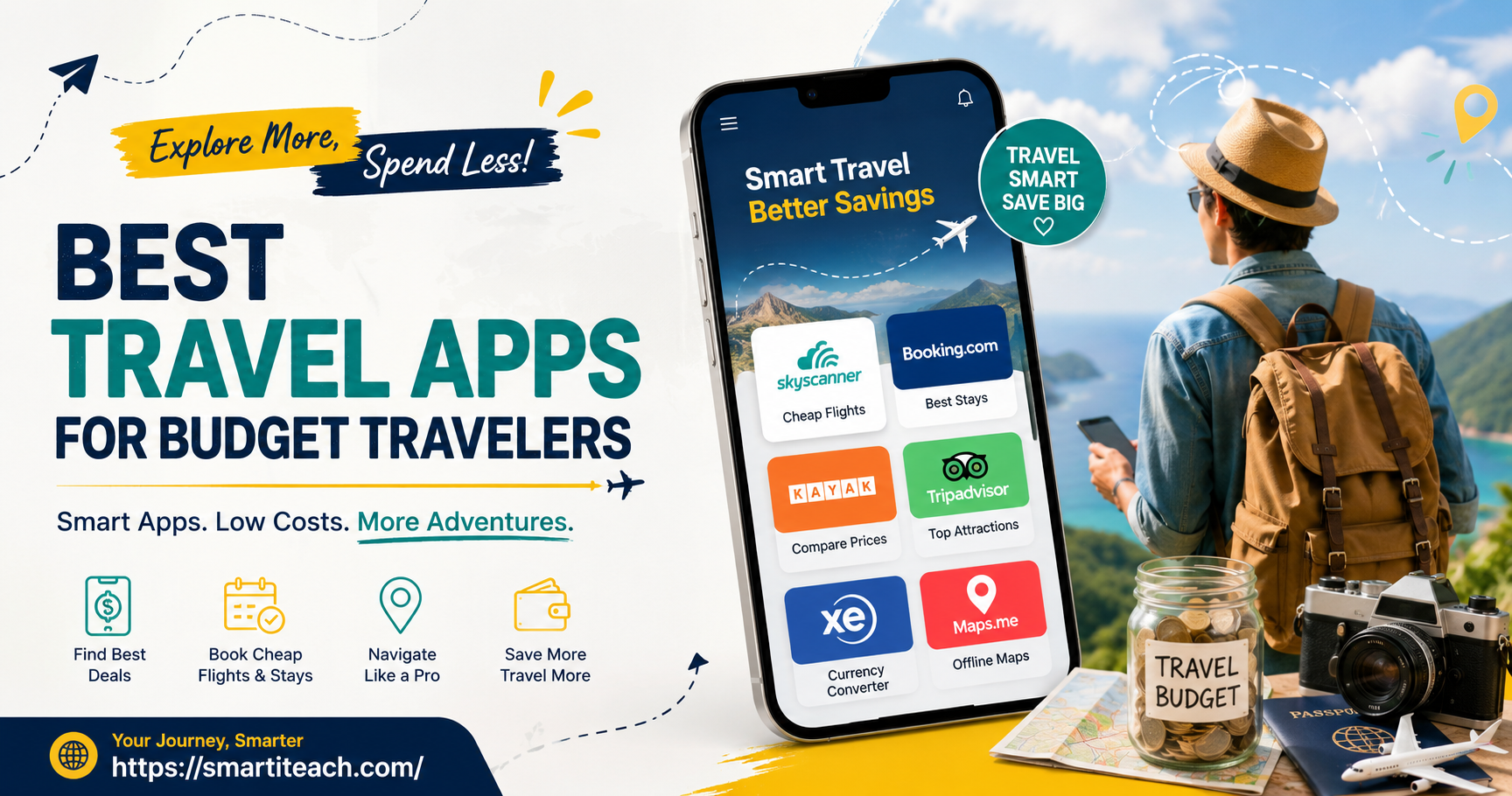
Skyscanner and Google Flights for Cheap Flights
Flights eat the biggest hole in most travel budgets, so this is where the savings matter most.
Skyscanner’s “everywhere” search is the one feature I genuinely can’t travel without anymore. You type in your home airport, leave the destination blank, and it shows you the cheapest countries to fly to on your dates. Sometimes the cheapest option is a place you hadn’t even thought about, and that’s kind of the point — let the price pick the destination sometimes instead of the other way around.
Google Flights does something different but just as useful. It shows a price history graph so you know if what you’re looking at is actually a deal or just a normal Tuesday fare dressed up. I’ve caught myself almost booking a “sale” that was, according to the graph, more expensive than the same route three weeks earlier.
One thing I’d tell anyone starting out — don’t book the first price you see. Open an incognito tab. Check again the next morning. Prices shift for reasons that don’t always make sense, and patience here genuinely pays for itself.
Hostelworld and Booking.com for Cheap Places to Stay
Where you sleep is the second-biggest chunk of your money, and it’s also where people either save the most or regret the most.
Hostelworld reviews tend to be blunt in a useful way. Actual hostel-goers writing them, not casual tourists, so you get real answers to real questions — is the wifi usable past 9 p.m., is the kitchen actually clean, do the bunk beds creak every time someone rolls over.
Booking.com is more useful the longer you use it, honestly. The discounts that unlock the more you book aren’t dramatic, but they add up quietly across a few trips, the same way a gym membership pays off more the longer you stick with it.
A small habit worth building: always filter for free cancellation. Budget trips change shape constantly — a delayed bus, a change of plans, a friend joining last minute — and losing a deposit over something you couldn’t control is a completely avoidable expense.
Google Maps and Local Ride Apps for Getting Around Cheap
This is where a lot of budget travelers accidentally overspend, mostly because they don’t know what a fair local price even looks like.
Google Maps quietly does more than get you from A to B. Check the public transit option before you land somewhere new, and you’ll usually find the airport train costs a fraction of a taxi while taking roughly the same time. That’s the difference between starting your trip calm or starting it annoyed.
Download the local ride-hailing app before you arrive, not after. Prices show up front, no haggling, no guessing whether the driver is taking the long way. In cities where the classic “off the street” taxi tends to charge visitors more, this one habit alone saves real money.
Wise and Splitwise for Managing Money Abroad
This part gets overlooked constantly, probably because currency conversion sounds boring compared to picking a hostel. But a bad exchange rate or a hidden foreign transaction fee will drain your budget slowly enough that you won’t notice until you check your bank statement weeks later.
Wise gives you the actual mid-market exchange rate instead of the padded one most banks quietly apply. Over a two-week trip, that difference is often enough to cover an extra night somewhere.
If you’re traveling with anyone else, Splitwise ends the awkward “who owes who” conversation before it even starts. Everyone just logs what they paid for, and it settles up automatically at the end. Nobody has to be the person bringing up money at dinner.
TripIt and Offline Maps for Planning Without Overplanning
There’s a line between being organized and spending your whole trip staring at spreadsheets instead of the place you flew to see.
TripIt pulls your flight, hotel, and booking confirmations straight from your email and builds a single itinerary automatically. No more digging through five confirmation emails trying to remember what time your train leaves.
Download offline maps for your destination before you arrive — this one’s easy to forget and expensive to regret. Standing on a street corner with no signal and no idea which direction your hostel is in is a specific kind of stress that a five-minute download the night before completely avoids.
Google Translate for Talking to People Who Don’t Speak Your Language
Budget travel usually means dealing directly with locals — street vendors, homestay owners, the woman running the noodle stall — rather than staying inside an English-speaking tourist bubble the whole time.
The camera translation feature, where you point your phone at a menu or sign and the translation overlays right on top, has made ordering food in unfamiliar places genuinely stress-free. I used it in a market once just to figure out if something was, in fact, chicken. It was not chicken.
Voice translation still isn’t flawless, but it’s good enough now to handle directions, basic haggling, and small talk, which covers most of what you actually need day to day.
eSIM Apps for Avoiding Roaming Fees
Roaming charges used to be one of the most punishing costs in travel, and this is one problem that’s actually been solved well.
Apps like Airalo let you buy a local data plan before you even land and activate it the second your plane touches down. No hunting for a SIM card kiosk at midnight in an airport you’ve never been to. Prices vary by region, so it’s worth comparing two or three before buying, but even the pricier options are a fraction of traditional roaming fees.
The Habit That Matters More Than the App
None of this works if you download it the day you’re already stressed and standing in a foreign bus station. Set up Wise before you land, not after a bad exchange rate. Load your offline maps the night before, not the moment you’re lost. Add your Skyscanner alerts weeks out, not the night before a flight you’re overpaying for.
Budget travel was never really about going without. It’s about being a little more prepared than the average traveler, letting a few apps quietly handle the boring math, so your energy goes toward the actual trip instead of the logistics behind it.




[…] key locations accommodation, key meeting points, the return airport as pinned or saved points before departure.Beyond just having the map downloaded, saving specific […]