

A friend of mine ran a small paid-ads agency for about six years before she sold it, and she told me once that the thing that killed more deals than bad pricing or weak case studies was just… slowness. A great call, real chemistry with the prospect, and then the proposal sits half-finished in a Google Doc for four days because everyone on the team is busy actually doing client work, which, fair, that’s the job. By the time it goes out the prospect’s already signed with whoever got back to them first. Not because that agency was better. Because they replied faster.
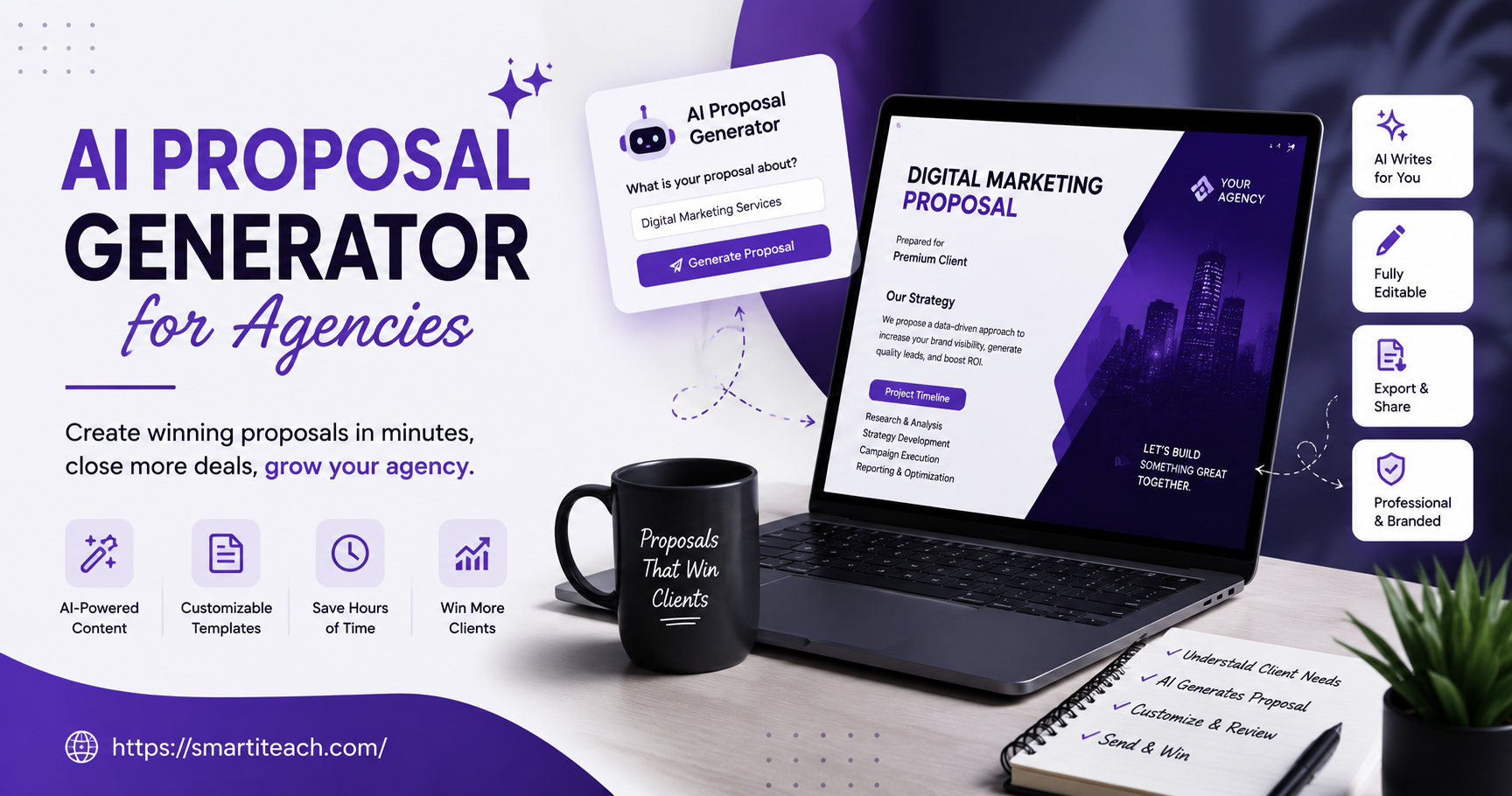
This happens constantly in agency land and almost nobody talks about it directly, because it’s embarrassing to admit a deal was lost to slow paperwork rather than some competitive weakness. An AI proposal generator fixes that specific problem — takes messy notes from a sales call and turns them into something client-ready in minutes instead of days.
Speed decides more deals than people admit
There’s actual research on this across service industries, and it holds up: response speed correlates with close rate more than almost anything else people obsess over. A prospect who gets a solid proposal within a day thinks, okay, these people are organized. A prospect who waits a week starts wondering if that slowness is going to show up later when they’re an actual paying client trying to get something urgent handled.
Most agencies don’t have someone whose entire job is writing proposals. Account managers and strategists squeeze proposal-writing into whatever gaps exist between actual deliverables, and both the speed and the quality suffer because of it. An AI tool removes that specific bottleneck. It produces a strong draft right after the call ends, and the human team edits instead of starting from nothing.
What’s actually happening under the hood
You feed it something — call notes, a transcript, answers from a short intake form covering goals, rough budget, scope. The tool takes that and builds a structured proposal: executive summary, scope of work, timeline, pricing, next steps. Standard stuff, but assembled instantly instead of over three coffee-fueled hours the night before a deadline.
The difference between this and some recycled template is that a decent tool actually reflects what was said on the call. Prospect mentioned wanting faster turnaround on social posts? A good generator picks that detail up and puts it directly in the proposal, rather than spitting out something so generic it could describe literally any client in any industry, which — let’s be honest — a lot of agency proposals already read like.
Some tools go further and pull from the agency’s own history, learning which pricing structures and packages actually converted in the past. Over time the drafts start reflecting what’s actually worked for that specific agency instead of some best-practice template pulled out of thin air by whoever built the software.
A real example, roughly
Take a ten-person digital agency doing paid search and social. Before any of this, the founder wrote every single proposal personally, which meant new business development competed directly with actually running client campaigns — never a great trade. Average turnaround was four to six days call-to-delivery, and something like a third of prospects had gone cold by the time the document showed up in their inbox.
After switching to an AI generator, the founder uploads notes right after each call, gets a full draft back in minutes, spends maybe fifteen or twenty minutes tightening the language, and sends it. Turnaround dropped under a day in most cases. Close rate went up noticeably within the first quarter — not because the writing got better in some literary sense, but because the gap between “interested” and “here’s the proposal” basically disappeared, and that gap is usually what decides things.
Features worth actually caring about
Skip the flashy demo and look at what the tool actually does day to day.
Pricing tables that calculate themselves save real time and avoid the kind of math error that’s embarrassing to catch after a client’s already signed.
Brand voice matching keeps things sounding like your agency instead of sounding like every other agency using the same tool — which, if you’re not careful, is exactly what happens.
CRM and call-recording integration cuts out manual re-typing, which is a small thing until you’re doing it fifteen times a month.
Version tracking and basic analytics let you actually see which pricing approaches and structures close deals, instead of guessing based on gut feel every time.
Where a human still has to step in
None of this should go out the door unedited. Ever. Pricing needs a real check against your current rates. Client names and industry details need a second look because tools do occasionally misread notes, especially if the input was vague to begin with. Tone matters too a generated draft sometimes reads a touch stiff or generic in spots, and a quick pass from someone who actually knows the client’s personality fixes that in a few minutes.
The goal here isn’t removing humans from the sales process. It’s removing the blank page and the formatting grind, so a strategist spends fifteen minutes refining instead of four hours building from scratch. Agencies that get the most out of this treat the draft as a strong starting point, not a finished product to fire off blindly.
Ways this goes wrong
Some agencies feed the tool almost nothing five words about a call and then wonder why the proposal reads generic. Makes sense though, right? Garbage in, garbage out applies here just like anywhere else. Detailed notes covering actual pain points and budget constraints produce something genuinely tailored. A vague summary produces something that could’ve been written for anyone.
Other agencies skip the review entirely trying to move even faster, and that’s how pricing mistakes or mismatched client details slip through. Fast beats slow, generally, but an inaccurate proposal hurts credibility worse than a slow accurate one ever would.
And some treat every deal identically once the tool’s in place, which shortchanges the bigger, more complex opportunities that genuinely deserve extra manual attention beyond whatever the AI draft produced. Save the fully-automated lane for smaller, standardized work. Give the big ones more care.
What this adds up to over time
Beyond the obvious time savings, agencies using this tend to build a more consistent process overall every proposal follows roughly the same shape, which makes it much easier to spot what’s converting and adjust pricing across the whole client base. New hires ramp up faster too, since they’re plugging into an existing system instead of guessing how proposals are supposed to look.



[…] I started looking into local AI assistants. Software that runs the model right there on your machine instead of shipping your words off to a […]
[…] transcription tools record your meeting, send the audio file off to a remote server, process it there, and send the text back to you. […]
[…] I actually started using AI tools for this, properly, not just dabbling, and that five hours dropped to maybe thirty minutes a week. […]