
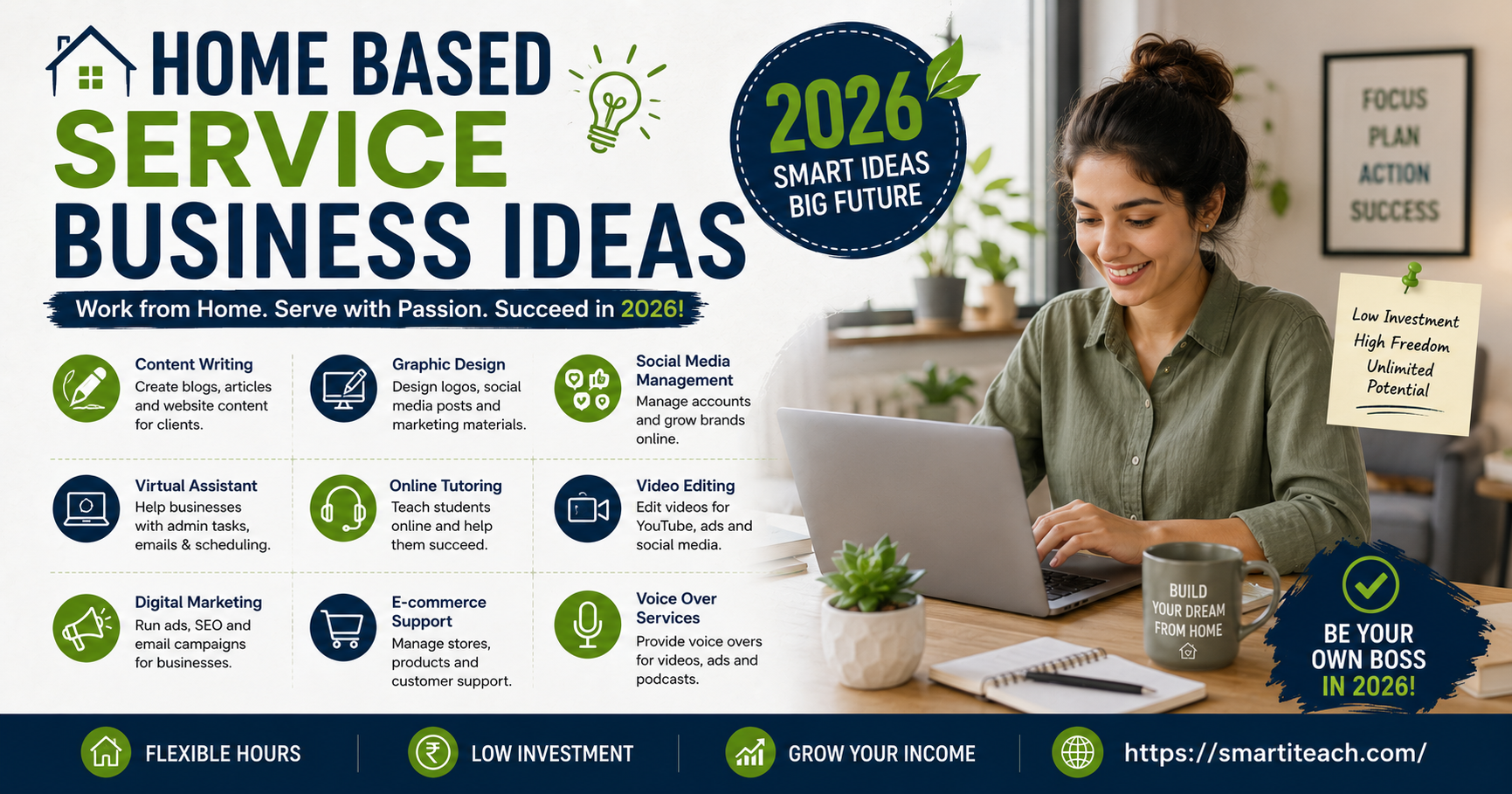

Okay so my friend Priya, she used to drive forty minutes each way just to sit in an office and format spreadsheets all day. That was her whole job basically. Last year she got fed up, quit, set herself up at her own kitchen table, and now she does the exact same spreadsheet work for four different small businesses. From home. On her own schedule. And weirdly she’s making more than she did at the office job, minus the two hours a day she used to lose to driving.
I bring this up because it’s basically the whole argument for home based service businesses in one story. No storefront. No employees to manage. Most of the time barely any money needed to get going. What you actually need is a skill somebody out there is willing to pay for, some basic gear (usually just a laptop, sometimes not even that), and the guts to start charging money for something you might’ve been doing for free out of habit.
2026’s a decent moment for this too, for what it’s worth. Companies are a lot more comfortable now hiring remote help instead of bringing someone on full time. People book stuff online without thinking twice, which wasn’t really true a few years ago. And half the tools that used to require an actual office — invoicing, scheduling, taking payments — just live on your phone at this point.
Anyway. Here’s what’s actually working right now. No filler.
Bookkeeping and Virtual Accounting Help
Nobody wants to do their own books. Nobody. Small business owners will invent almost any excuse to avoid it, which is exactly why this stays such a reliable home business option year after year, recession or not.
You don’t need to be a CPA to start doing basic bookkeeping for small clients — reconciling accounts, sorting expenses, getting things ready for whoever does their taxes. QuickBooks and Xero both run certification courses, a few weeks long, not years. Most people I’ve come across started this on the side, one or two small clients, evenings only, before ever going full time with it.
Best part, it repeats. Land one client and they usually just stay, month after month, so the income actually starts feeling predictable the longer you stick with it.
Virtual Assistant Work
This one’s a catch-all, kind of on purpose. Some VAs mostly manage inboxes and calendars. Others handle social scheduling, customer replies, data entry, research, whatever the business owner doesn’t have hours for. Some go niche — real estate VAs stay booked year-round doing listings, paperwork, chasing client follow-ups agents don’t have time for.
Low barrier to get in, that’s the appeal. Reasonably organized, comfortable with common software, you can start this week if you wanted to. Rates swing wildly depending on what you actually do though — higher-skill stuff like project support pays a lot better than someone just clearing an inbox.
Freelance Writing and Content Services
Businesses still need blog posts, newsletters, product pages, website copy, all of it, and a lot of them would honestly rather pay someone from home than keep a writer on staff full time. AI hasn’t really killed this the way people worried it would. If anything it’s shifted things — companies now need people who can take a rough AI draft and fix it, fact-check it, make it not sound like a robot wrote it. Different skill than writing cold, but still very much needed out there.
Picking a lane helps a lot. Generalist writers are competing with the entire internet basically. Someone who only writes for dental offices, or SaaS companies, or real estate agents ends up with a much easier time finding steady work and actually charging real money for it.
Social Media Management for Small Businesses
Every local business owner knows they’re supposed to be posting. Almost none of them actually have time or patience for it. That gap right there is where this business lives.
Typical setup might be three or four small accounts — a restaurant, a salon, some contractor — a handful of posts a week, replying to comments, tossing together a simple report at month’s end. Doesn’t take much gear. Phone camera, couple editing apps, that covers most of it starting out.
Works especially well when you already know the industry. Someone who used to work in a salon has a much easier time managing accounts for other salons than someone coming in totally cold.
Online Tutoring
Parents are still paying for tutoring, it’s just mostly online now. Math, science, test prep, the obvious stuff, but language tutoring’s grown a good bit too, and so has teaching kids basic coding.
Don’t need a teaching degree for most of it, though credentials or experience let you charge more. Platforms out there connect tutors with students directly, or you find clients yourself through local Facebook groups, word of mouth, whatever, which tends to pay better honestly since nobody’s taking a cut off the top.
Virtual Interior Design and Home Staging Consultations
Surprises people, this one, but it’s grown steadily. Instead of an in-person visit, client just sends photos and measurements, designer puts together a plan, mood board, shopping list, all sent digitally. Home stagers do something similar for people about to sell — remote advice on what to fix, remove, rearrange before listing photos go up.
Works well because it’s a lot cheaper for the client than an in-person visit, and works for you because there’s zero travel eating into your day. If you’ve got an eye for this kind of thing, it’s a genuinely cheap way to start making money off it.
Resume Writing and Career Coaching
Job hunting’s stressful enough that people happily pay someone to fix their resume, clean up their LinkedIn, run them through a mock interview before something important. Tends to spike whenever the job market gets shaky, which oddly makes it a fairly recession-resistant thing to offer.
Most people doing this offer a few tiers — basic resume edit, a full resume-and-cover-letter bundle, sometimes ongoing coaching for someone stuck in a longer search. All doable with just a laptop and solid writing skills, nothing fancier than that.
Pet Sitting, Dog Walking, and Pet-Related Services
Not everything here happens behind a screen. Pet care’s stayed strong for years, no signs of slowing. Dog walking, pet sitting, boarding animals overnight in your own house, mobile grooming, all of it counts.
Startup cost’s basically nothing. Dog walker needs a leash, decent shoes, a way to take bookings. Pet sitters who board animals at home can charge a good bit more than walkers, especially around holidays when demand spikes and regular kennels fill up fast.
Cleaning and Organizing Services
Home organizing’s had a real moment these past few years, partly because of all those dramatic before-and-after posts everywhere online. People genuinely pay for help decluttering a closet, sorting out a pantry, setting up systems that actually stick once you’re gone.
This one does mean going into someone’s house, so not fully remote, but it’s still a home based business at the core, no office, no storefront, just you, some supplies, a booking calendar. Cleaning’s similar though that market’s more crowded now, so standing out usually means picking something specific — move-out cleans, post-construction, eco-friendly products as your whole angle.
Meal Prep and Personal Chef Services
More people want home-cooked food without the time to actually cook it, which has kept demand steady for personal chefs and meal prep run out of a regular home kitchen. Depending where you live you might need a food handler’s permit, or access to a certified commercial kitchen for part of it, so check local rules before diving in headfirst.
People who do well here pick a niche instead of trying to cook for everybody — high-protein prep for gym regulars, diabetic-friendly meals, family-style weekly dinners. Focused menu’s easier to prep efficiently and easier to market too, honestly.
Website Design and Small Business Tech Support
Plenty of small business owners need a website and want absolutely nothing to do with building it themselves. Squarespace, Wix, all that has made it more approachable than it used to be, but most owners still just want someone else handling the setup, the copy, the ongoing little tweaks.
Pairs well with basic tech support too — helping owners set up their Google Business profile, sort out email issues, connect booking software to their site. None of it needs a computer science degree. Just patience, and knowing your way around a handful of common platforms.
Photography for Local Businesses
Restaurants need food photos. Real estate agents need listing photos. Small shops need product shots for their site and social pages. Most of this doesn’t need a fancy studio, just a decent camera, some editing chops, and showing up and shooting efficiently.
Building this out of your house usually means editing everything at home even when the shoot itself happens somewhere else. Keeping the editing and the business side running out of a home office keeps overhead low while you build up a client list.
Getting Started Without Overthinking It
The businesses that actually take off, they’re usually not the ones with the fanciest logo or the most polished site on day one. They’re the ones where somebody picked one specific skill, told a handful of people about it, and just took the first client even though everything wasn’t perfect yet.
Most of what’s on this list can start with basically no money, a laptop you already own, a phone you already carry around, some skill you’ve picked up somewhere without even realizing it fully. It’s not really about finding some secret idea nobody’s thought of before. It’s about picking one of these, getting specific about who you’re actually serving, and just starting instead of waiting around for some perfect moment that never really shows up anyway.
Go with whichever one matches something you already know how to do. That’s usually the fastest way to land your first paying client, and the rest tends to build itself from there.




[…] is where “legally” really matters, because the line between a smart deduction and an audit risk isn’t […]
[…] I’ve been freelancing long enough to know that the actual work is rarely the hard part. Writing the copy, building the site, editing the video, whatever it is you do — that’s the part you’re good at. What trips people up is the invoice. The thing that’s supposed to be simple ends up being the reason you’re refreshing your bank app three times a day wondering where your money went. […]
[…] them. Ask what worked, what didn’t, whether they’d buy again. Half the time they’ll tell you exactly […]