
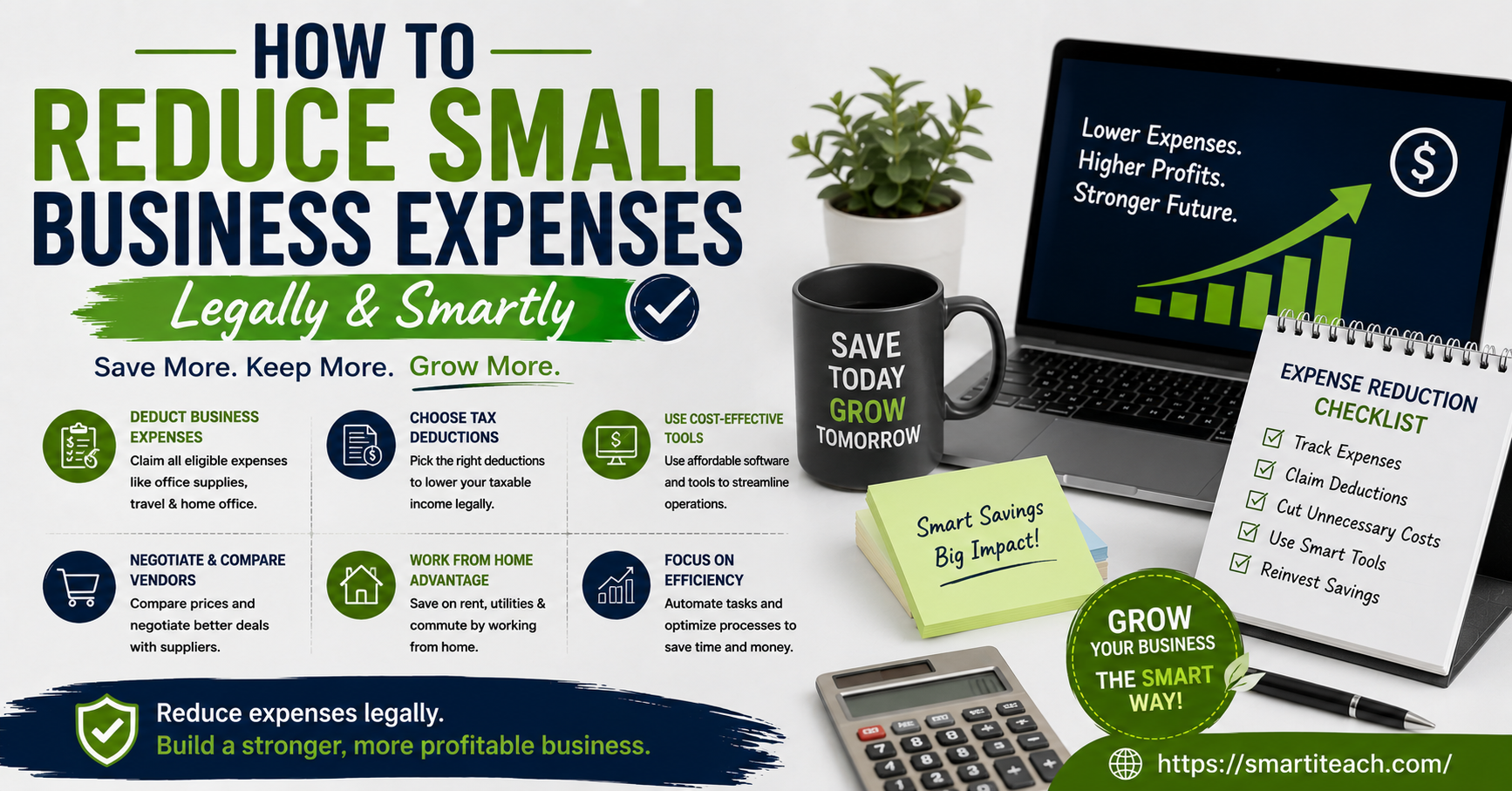

A few years back I sat down with my accountant, spread every statement I had across her desk, and asked the question every small business owner eventually asks in a slightly panicked voice: where is all this money actually going. She didn’t have a magic answer. What she had was a list of boring, unglamorous habits that, stacked together, ended up saving more than any single big decision I’d made all year.
That’s basically what cutting expenses legally comes down to. Not loopholes, not tricks, not anything your accountant would wince at. Just a lot of small, deliberate choices that add up, plus knowing which ones you can actually claim without inviting a headache from the tax office later.
Start by knowing exactly where your money’s going
I used to think I had a decent handle on my expenses because I glanced at my bank balance a couple times a week. That’s not the same thing as knowing where money goes, and it took an embarrassingly long time to admit it.
Pull every statement, every subscription, every recurring charge from the last three months and actually look at it line by line. You’ll find things you forgot you were paying for — a software trial that quietly became a monthly charge, a storage unit you stopped needing, a service two people on your team both subscribed to separately without realizing it. None of this shows up if you’re just eyeballing your bank balance. It shows up when you sit with the actual numbers.
Once a quarter, do this properly. Not a five-minute skim — an actual sit-down with your statements and a highlighter, or a spreadsheet if that’s more your speed.
Renegotiate before you assume you’re stuck
Most small business owners never ask their vendors for a better rate, mostly because it feels awkward or like it won’t work. It works more often than you’d think. Suppliers, insurance providers, even your landlord in some cases would rather adjust terms than lose a paying customer, especially one who’s been reliable.
I called my business insurance provider two years ago just to ask if there was anything better available, expecting nothing, and walked away with a lower premium for basically the same coverage just because I’d been claim-free for a while and asked directly. Didn’t cost me anything to ask. Worth doing annually with anything you’re locked into — insurance, internet, software subscriptions, even payment processing fees, which a lot of business owners never think to negotiate at all.
Audit your subscriptions like you mean it
Software creep is real and it’s sneaky. A tool gets added for one project, nobody remembers to cancel it, and eighteen months later you’re paying for six different platforms that all do roughly the same thing because different people on your team each picked their own favorite.
Go through every recurring software charge and ask, honestly, who’s using this and how often. Anything nobody’s touched in sixty days is a candidate for cancellation. Anything with overlapping functionality — two project management tools, two design programs — pick one and consolidate. This alone tends to surprise people with how much it adds up to over a year.
Claim every legitimate deduction, but know the line
This is where “legally” really matters, because the line between a smart deduction and an audit risk isn’t always obvious if you’re new to running a business.
Legitimate, ordinary business expenses are generally deductible — think office supplies, business-related travel, a portion of your home if you genuinely work from a dedicated space, professional development, business insurance, and reasonable marketing costs. The keyword is “ordinary and necessary” for your specific business. A graphic designer claiming a high-end camera makes sense. The same claim from a bookkeeper probably raises questions.
Keep receipts. Keep them organized, not shoved in a shoebox for your accountant to sort through every April. A simple habit of photographing receipts the day you get them, using whatever expense app your accounting software already offers, saves hours later and protects you if anything’s ever questioned. Claiming a deduction you can’t back up with paperwork isn’t really a deduction — it’s a liability waiting to happen.
Rethink office space before signing another lease
Physical space is one of the biggest recurring costs most small businesses carry, and it’s often sized for a version of the business that no longer exists — bigger team, more foot traffic, plans that changed. If you’re paying for square footage you don’t actually use most days, that’s a real place to look.
Coworking memberships, shared space arrangements, or downsizing to a smaller footprint with occasional access to meeting rooms can cut this cost dramatically without touching how the business actually operates. I moved from a full office lease to a smaller space with shared conference rooms and genuinely didn’t notice a difference in how the work got done — just a very noticeable difference in what left my account every month.
Buy in bulk, but only for things you’ll actually use
Bulk buying gets pitched as an automatic win, but it only saves money if you’re not letting product expire or sit unused in storage, which quietly cancels out the discount. Look at what you consistently reorder — packaging, office supplies, raw materials with a decent shelf life — and negotiate volume pricing on those specifically. Skip it for anything you’re not certain you’ll use before it goes stale or outdated.
Consider outsourcing instead of hiring for everything
Full-time employees come with costs beyond salary — benefits, payroll taxes, equipment, training time. For work that doesn’t need daily, in-house attention, freelancers or contractors handling bookkeeping, design, or specialized one-off projects can cost significantly less than a full-time hire, while still getting the work done to a professional standard.
This isn’t about avoiding paying people fairly — it’s about matching the type of help to the actual need. A business that needs twenty hours of design work a month doesn’t need a full-time designer on payroll; it needs a reliable contractor for those twenty hours.
Time major purchases around your tax year
When you make a big purchase can matter almost as much as whether you make it. Equipment, software licenses, and other capital expenses bought near the end of your tax year can sometimes be deducted sooner, depending on your jurisdiction’s rules, which can meaningfully affect what you owe. This isn’t about buying things you don’t need just for the deduction — that’s a losing trade no matter how you look at it. It’s about timing purchases you were going to make anyway in a way that works in your favor.
Talk to your accountant before assuming any of this applies to your specific situation, because rules vary significantly by location and business structure, and getting it wrong costs more than any savings you were chasing.
Reduce energy costs without a big investment
For businesses with a physical location, energy costs are one of those expenses people tend to accept as fixed when they’re actually not. Switching to LED lighting, using programmable thermostats, and simply auditing which equipment stays running overnight for no reason can shave a noticeable amount off a monthly bill without any major investment. Some utility providers also offer small business energy audits at no cost, which is worth asking about directly instead of assuming it doesn’t apply to you.
Review your payment processing fees
This one gets overlooked constantly. Payment processors all charge different rates, and many small businesses stay on whatever plan they signed up for years ago without ever comparing it to what’s currently available. Even a small percentage difference on processing fees adds up fast if you’re running any real volume of transactions. It’s worth an hour every year or two to actually compare a couple of processors against your current rate, especially since some options are actively cheaper for the specific mix of in-person versus online payments your business handles.
Don’t confuse cutting expenses with cutting corners
There’s a version of cost-cutting that saves money short-term and costs you a lot more down the road — cheaping out on something that actually protects the business, like proper insurance, quality control, or paying your accountant properly to do things right the first time. Legal expense reduction means trimming what’s genuinely excess, not gutting the parts of the business that keep it running safely and legitimately.
If a cost-cutting idea makes you a little uneasy about whether it’s actually allowed, that instinct is usually right. The businesses that get into real trouble aren’t the ones spending too much — they’re the ones that cut a corner they weren’t supposed to touch and found out the hard way.
The bottom line
Reducing expenses legally isn’t one big move. It’s the accumulation of a lot of unglamorous habits — actually reading your statements, asking vendors for better terms, canceling what you’re not using, claiming what you’re genuinely entitled to and nothing more, and timing the bigger decisions with some intention instead of on autopilot. None of it feels dramatic in the moment. All of it adds up by the time you look at your numbers a year later.
The goal was never to spend as little as possible. It’s to spend on purpose, and stop quietly leaking money on things nobody’s actually watching.




[…] happens again the next week. Six months in, nobody can say for sure which transactions were “the business” and which were just life happening. Groceries sitting right next to office supplies on the […]