
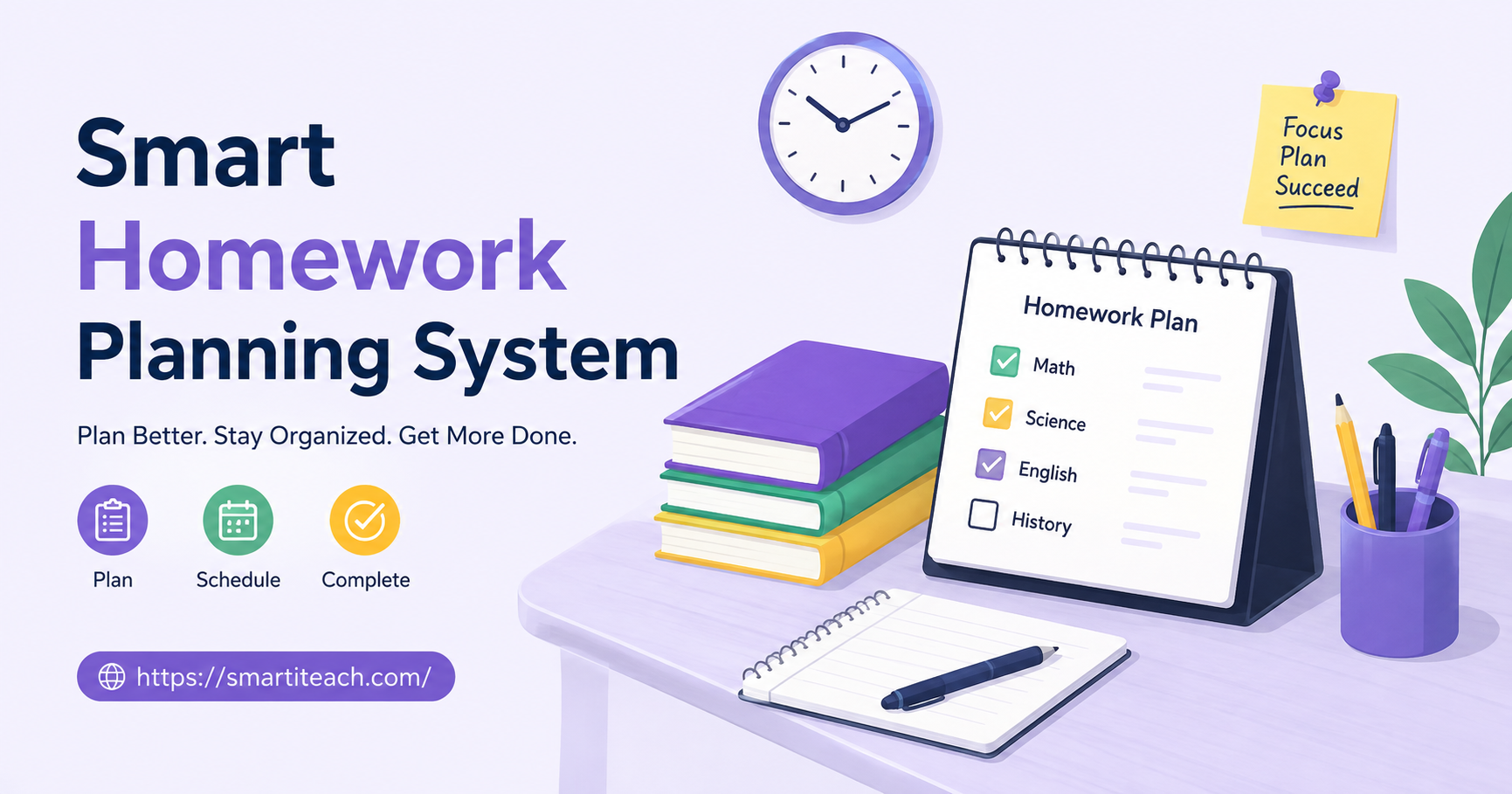

Every house with a kid in school has had this exact night. Homework’s due tomorrow. The kid’s staring at a math worksheet, not writing anything, just staring. A parent hovers, tries not to hover, fails at not hovering. Forty minutes pass and exactly nothing has been solved except everyone’s patience. That whole scene the nightly stall-out is usually less about the subject and more about there being no actual plan. A Smart Homework Planning System exists to fix that before it starts.
It’s Rarely About the Subject
Here’s the thing nobody says out loud: most homework fights aren’t really about fractions or essays. They’re about not knowing where to start. A student’s got three things due Friday and zero sense of which one eats the most time, so everything feels urgent at once, which somehow means nothing gets started at all. It’s a weird psychological trap and it happens constantly.
Paper planners try to solve this and mostly fail, because they need the student to remember to use them every single day without fail. Miss one entry and the whole thing falls apart sticky notes slide off desks, agendas get left in backpacks, and within two weeks the “system” is just an empty notebook gathering dust in a bag. This isn’t a discipline problem. It’s a maintenance problem, and manual systems demand maintenance that busy kids just don’t reliably give.
Where AI Actually Helps Here
A Smart Homework Planning System pulls assignments straight from the school’s platform Google Classroom, Canvas, whatever the district uses and sorts them automatically by due date and estimated effort. No blank list staring back at you. Instead, there’s a realistic breakdown of what tonight actually looks like.
The good ones do a few things well: they import assignments without anyone typing them in by hand, they estimate how long a task will realistically take based on the type of work and the student’s own history, they flag what’s genuinely urgent versus what can wait, and they send reminders before the deadline hits, not some useless notification after it’s already too late.
That structure does something simple but powerful it removes the blank-page paralysis. Kid opens the app, sees three specific tasks in order, and just… starts. No staring contest with a worksheet required.
Setting It Up Without Overcomplicating It
Start with a short, honest conversation. Is the trouble starting tasks? Finishing them? Guessing how long something takes and being wildly wrong? These are different problems and different tools solve them differently, so figure out which one’s actually happening before picking software.
If the school’s learning platform supports it, connect the import directly. Most do now. Once assignments flow in on their own, the manual-entry burden the part that kills most planning systems within a month basically disappears.
Keep the daily workload realistic. A system that schedules four straight hours of homework every night gets abandoned by day five, guaranteed. Build in breathing room. Let it learn and adjust as it sees how long things actually take for that specific kid, because every kid’s pace is genuinely different.
What Parents Notice First
Two weeks in, most parents report the same thing: evenings just got quieter. The nagging drops off because the kid already knows what’s next without being told. The “I forgot I had that” excuse mostly evaporates too, since the assignment data comes straight from the teacher’s own platform there’s no room left for the old miscommunication routine.
Kids feel less overwhelmed as well. A messy pile of “homework” as one giant undefined blob is intimidating. The same work broken into four specific fifteen-minute chunks? Way less scary. Small wins add up fast once the fear of the unknown gets removed.
Keeping It From Falling Apart
A system only survives if it stays simple. Resist the urge to add ten color-coded categories in week one start with just due dates and priority, and only add complexity once that baseline is actually working.
Check in together once a week for the first month, at least. It builds trust in the tool and catches anything that slipped through the automatic import (it happens occasionally, nothing’s perfect). After that first month, the check-ins can get less frequent as the habit sets in on its own.
One more thing don’t turn this into a punishment tool. If every missed deadline becomes a lecture triggered by the app, the kid starts avoiding the app, and then the whole thing’s dead in the water. Keep it framed as support, not surveillance, and it earns actual trust.
A Smart Homework Planning System won’t fix every rough night. But it swaps chaos for structure, and that alone changes the whole tone of an evening.