
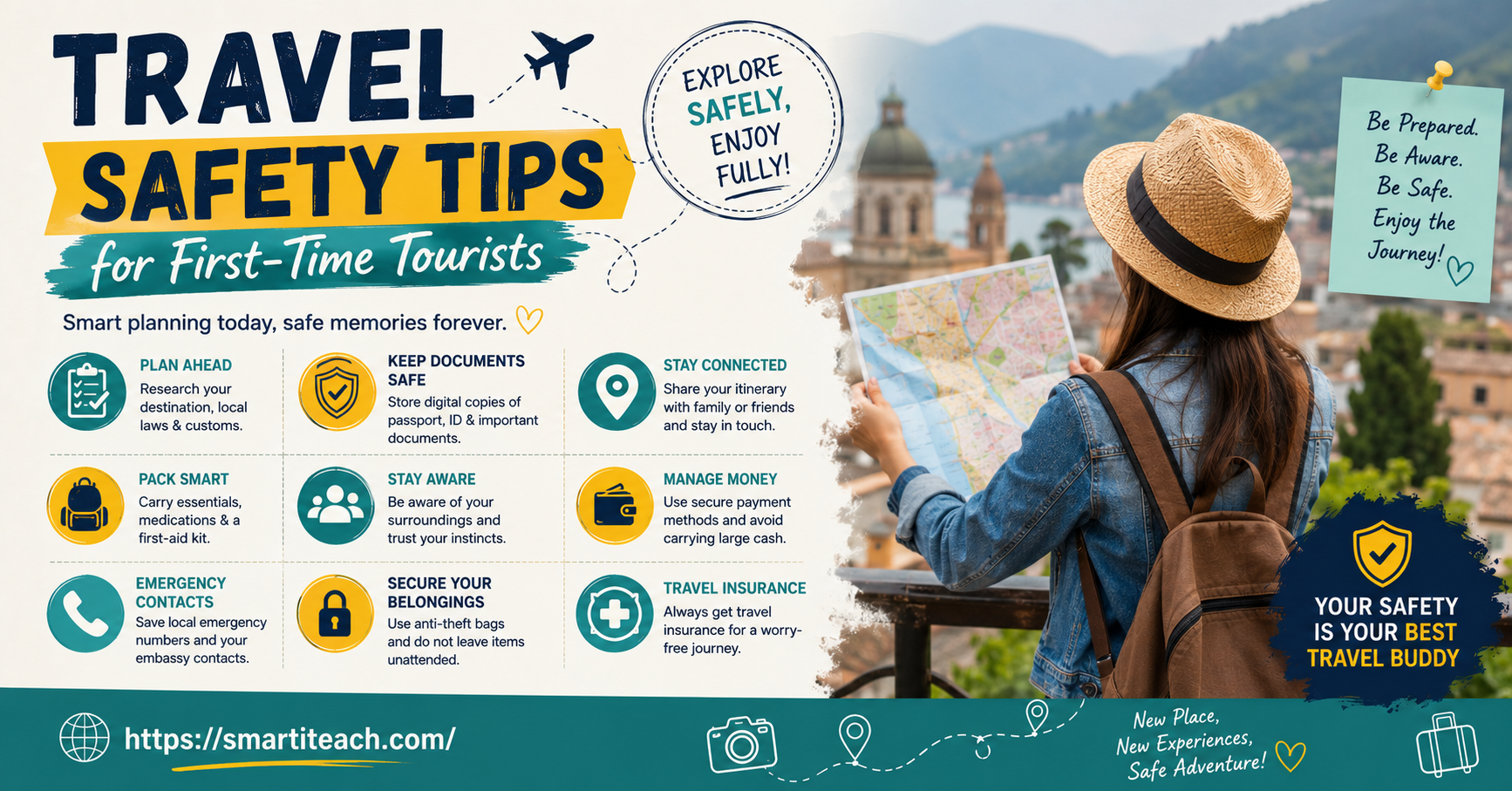

I remember standing outside an airport, first real trip, no idea what I was doing. Holding my phone like it was oxygen. Nobody had told me the boring stuff. Not the “guard your passport” advice, everyone says that. The actual stuff. The stuff that matters at 11pm when you’re not sure which street you’re on.
So here it is. Plainly. Not a checklist you skim once and forget by baggage claim.
Why First-Timers Get Targeted More Than They Realize
It’s not bad luck. It’s how you move. You walk slower because you’re reading signs you can’t read fast. You stop dead in the middle of a sidewalk to check a map, and everyone behind you has to walk around you. You look lost. Because you are. People clock that faster than you’d expect, and not always the people you’d want noticing.
Not your fault. You just haven’t built the instincts yet. Takes time. But you can borrow some of it in advance, which is the whole point of this.
Research the Street, Not the City
“Is this city safe” is the wrong search. Safety changes block by block. Sometimes side of the street to side of the street, no exaggeration. Look up the actual neighborhood name. Not the city. Pair it with “at night” or “for tourists” and see what comes up.
Skip travel blogs here, mostly. They’re written to get you to click a hotel link, not warn you about anything real. Local news, even translated badly through a browser, tells you more.
Stop Looking Like You’re Lost
Small thing. Matters more than it should. Phone up the whole walk, staring at a map, snapping a photo of your boarding pass in the middle of a crowd — all of it says “new here” louder than you think it does.
Screenshot the route before you leave the hotel. Glance, pocket the phone, walk like you know. You don’t have to know. Just walk like it. People who look uncertain get approached more. Not always by someone trying to help you.
Split Your Cash and Cards Before You Even Leave Home
Kitchen table, not airport gate, rushing. One card and some cash for the day. Backup card and emergency money somewhere else entirely — different bag, hidden pouch, whatever works for you.
Leave a copy of your passport and insurance with someone back home. Photo’s fine. Save it somewhere offline too, not just in an app that needs wifi. Lose your wallet, you’re annoyed. Not stranded.
Know the Emergency Number Before You Land
Not 911 everywhere. Could be 112, could be 999, could be something you’ve genuinely never heard of. Look it up before the flight. Save it in your notes app. Not your memory — memory blanks out right when you need it, every time.
Save your embassy’s address too while you’re at it. Probably won’t need it. If you do, you don’t want to be searching mid-panic with 4% battery.
Listen to the Awkward Feeling, Not Politeness
This one actually prevents harm. If something feels off, leave. Even if it’s rude. Even if you’re probably wrong about it.
First-timers stay in bad situations because they don’t want to offend anyone, or because everything already feels weird so the discomfort just blends in. Your gut doesn’t know you’re on vacation though. Still reading tone the same way it does at home. Driver takes a route your map doesn’t show — say something. Someone’s pushing too hard to “help” you somewhere — walk off mid-sentence if you have to. You don’t owe anyone the end of that conversation.
Learn the Scams Specific to Where You’re Going
Skip the generic top-ten-scams lists, they’re recycled every year with the same five examples. Search scams reported in your actual destination, last twelve months. These shift constantly. What worked on tourists five years ago probably doesn’t anymore.
Still — worth knowing the shapes. Someone spills something on you, “helps” clean it up, someone else takes your bag while you’re distracted. A stranger offers to take your photo, walks off with your phone instead. A taxi quotes one number, claims the meter’s broken once you’ve arrived somewhere unfamiliar. Different costumes, same trick basically.
Don’t Post Your Location While You’re Still There
The sunset photo can wait an hour. Real-time location tells anyone watching exactly where you are — and just as much, where you aren’t. Like your hotel room. Empty. Post it after you’ve already left.
Pack a Small Health Kit and Actually Know What’s In It
Not a pharmacy. Just pain relief, rehydration salts, any prescriptions in original packaging with a copy of the script, basic wound care. First-timers assume they’ll “just find a pharmacy.” Sometimes that’s harder than it sounds — odd hours, small towns, holidays you didn’t know about.
Check vaccinations too. Weeks before, not the night before your flight, that’s basically too late for some of them.
Back Up Everything Important, Twice
Photograph your passport, visa, insurance policy, bookings, emergency contacts. Three places — email, an offline note, printed paper in a separate bag from the originals. Feels excessive right up until the day your bag disappears or your phone dies with zero chargers in sight.
Actually Read What Your Travel Insurance Covers
Most people grab the cheapest one and never open the PDF. Check medical evacuation, theft, cancellation, and anything active you’re doing — scooters, diving, altitude hiking, that kind of thing gets excluded more than people expect. Read it now. Calm, at home. Not from a hospital bed, translating a form you can’t understand.
Learn the Phrases That Actually Matter
Forget just hello and thank you. Learn “I need help.” “Where’s the nearest hospital.” “Call the police.” Most people only learn the polite ones and skip these completely. Fifteen minutes, before you fly. Hope you never need it. Glad you’ll have it if you do.
Dress to Blend In, Not Stand Out
Not about style. About not being the obvious target in the group. Flashy jewelry, gear still creased from the packaging, clothes that scream “visiting from somewhere wealthier” — all of it draws eyes in certain places. Look at what people around you are actually wearing. Lean that way. Small shift. Real difference.
Pick Accommodation for Safety, Not Just Star Ratings
Good rating doesn’t mean safe street, those aren’t the same thing. Look for reviews mentioning the neighborhood at night specifically, how solid the locks are, whether the entrance is lit. Message the host directly if you can. Ask what the walk from the nearest station looks like after dark.
Set Up a Check-In With Someone Back Home
Agree on something simple before you leave. Daily text. Shared location app. A call at a set time. Not about being tracked — about someone noticing fast if something’s wrong, instead of three days later.
Expect Small Mistakes, Not a Perfect Trip
You’ll still get overcharged somewhere, probably. Take a wrong turn onto a street that makes your skin crawl a little. Happens to people who’ve traveled for years too. The goal was never a flawless trip. It’s a trip where the small mistakes stay small, because you built in enough to catch them before they turned into something else.
Final Thoughts
Your first trip isn’t a minefield. The travelers who feel safest abroad didn’t memorize every warning on the internet. They just built a handful of habits into how they move through unfamiliar streets. Split your money. Trust the awkward feeling. Keep backups. Blend in a little. Check in with someone.
None of it takes years. Just takes being ready in the ways that actually matter — the ones that never make the generic lists, but the ones people who travel a lot actually rely on. Go in ready. Then let yourself enjoy it, that’s the whole point anyway.




[…] than the exact planned itinerary, verify the downloaded region’s actual coverage before leaving reliable home connectivity, save key locations (accommodation, key meeting points, return transport hubs) as […]