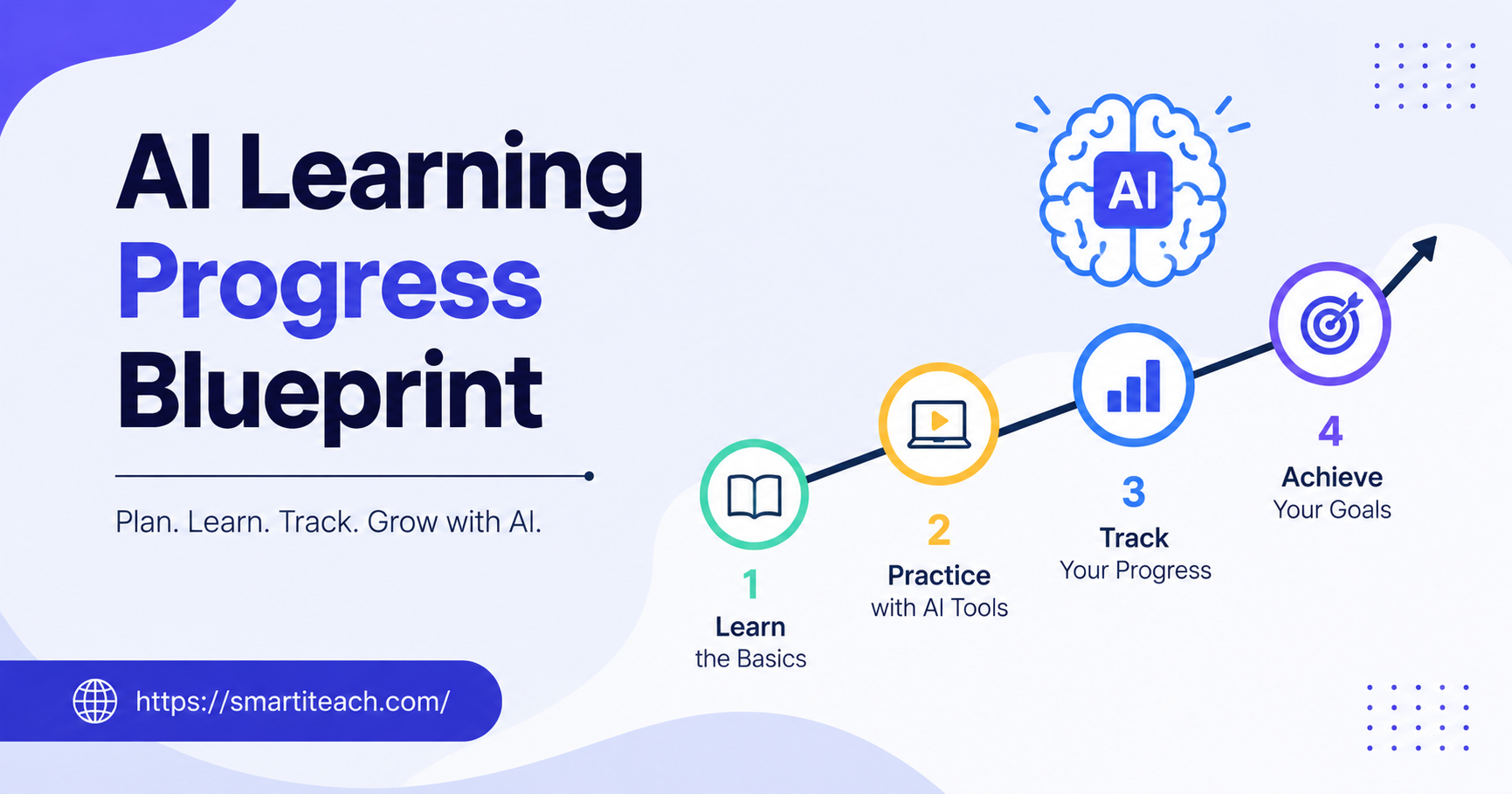

A kid studies for two hours straight. Highlighter in hand, notebook open, the whole scene looks productive. Then the test comes back and it’s a 62. What happened? Nobody really knows, because nobody was tracking anything beyond “time spent sitting at the desk.” That’s the gap an AI Learning Progress Blueprint is meant to close, and honestly, once you see it work for a few weeks, going back to guesswork feels almost irresponsible.
Why the Old Way of Tracking Falls Apart
Report cards show up way too late to actually help anyone. A student might start losing the thread on fractions back in September small stuff, a wrong sign here, a mixed-up numerator there and nobody catches it until the November test lands with a thud. By then it’s not one gap anymore, it’s three gaps stacked on top of each other, because math builds on itself like that.
Teachers want to catch this earlier. Of course they do. But when you’ve got thirty kids and six periods a day, you physically cannot watch every single one closely enough to notice the quiet ones slipping. The loud struggles get attention. The quiet ones don’t, and quiet struggles are usually the ones that matter most.
People have tried fixing this with spreadsheets and paper trackers for years. They never stick. Someone forgets to update the sheet on a Tuesday, then it’s Thursday and nobody’s touched it, and by the following week the whole tracking system has quietly died without anyone officially declaring it dead.
So What’s Actually Different Here
An AI Learning Progress Blueprint just… watches. Continuously. Every quiz answer, every homework submission, every extra minute spent rereading a paragraph it all gets logged without a human lifting a finger to record it. That’s the whole point. Nobody has to remember to write anything down because the system is already doing it in the background.
What does it actually track? A handful of things matter most: time spent per topic, how accuracy shifts across quizzes over weeks (not just one bad test), which skills are locked in versus shaky, and this one’s underrated the specific type of mistake showing up again and again. A kid who keeps flipping signs on negative numbers is telling you something very different than a kid who just runs out of time on the last three questions.
Give it three or four weeks and patterns start showing up that a teacher grading in isolation would never spot. Maybe reading fluency is fine but inference questions tank every time. Maybe equations are quick but two-step word problems slow everything to a crawl. This stuff hides in plain sight in a normal classroom. The data just makes it impossible to miss.
Actually Setting One Up
You don’t need to be technical for this. Start with one question: what subject or skill needs the closest eye right now? Pick something specific. Then find a tool that already does quiz tracking or reading-level tracking a lot of school platforms already have this baked in, so check before buying anything new. Seriously, check first. Half the time the school’s already paying for something with this built in and nobody’s using it.
Decide on a review rhythm. Weekly works for most families. Ten minutes on a Sunday night, looking at what shifted, is enough to catch a problem before Monday’s lesson makes it worse.
And here’s the part people skip: connect the data to an actual change. Tracking progress and then doing nothing different is just… expensive note-taking. If the blueprint shows comprehension tanking after twenty minutes, shorten the sessions. Add a break. Small adjustment, real impact.
The Payoff, for Real
Kids feel it first. Seeing “fractions mastery up from 45% to 80% this month” does something a vague B-minus never could. Teachers save hours too, because struggling students get flagged automatically instead of buried in a stack of ungraded quizzes waiting for a free period that never comes.
Parents get something too a real conversation starter. Instead of the nightly “how was school” / “fine” exchange going nowhere, there’s an actual dashboard to point at. “Hey, looks like reading comprehension dipped this week, what’s going on?” That’s a very different conversation than guessing.
Where People Mess This Up
Some families treat the numbers like gospel and forget the human context. A rough week doesn’t always mean a skill gap sometimes a kid just had a bad Tuesday, or didn’t sleep, or is dealing with something totally unrelated to fractions. Check in before overhauling anything based on one dip.
Others collect the data religiously and never look at it. Set a reminder. Actually open the dashboard. It sounds obvious but it’s the single most common failure mode.
And don’t pile on five tools at once thinking more data equals more insight. It usually just equals confusion. Pick one, learn it, and only add more once the first one’s actually proving useful.
An AI Learning Progress Blueprint doesn’t replace good teaching or good parenting. It just replaces the guessing part with something you can actually see.