

I once watched a friend sink almost everything he had into a second location for his bakery before he’d even confirmed people wanted the new product line. Bigger oven. New lease. Two extra hires. Six months later he was selling the equipment on Facebook Marketplace for a fraction of what he paid. That’s the story that comes to mind whenever someone asks me why lean thinking matters. It’s not about being cheap. It’s about not finding out you were wrong after you’ve already spent the money.
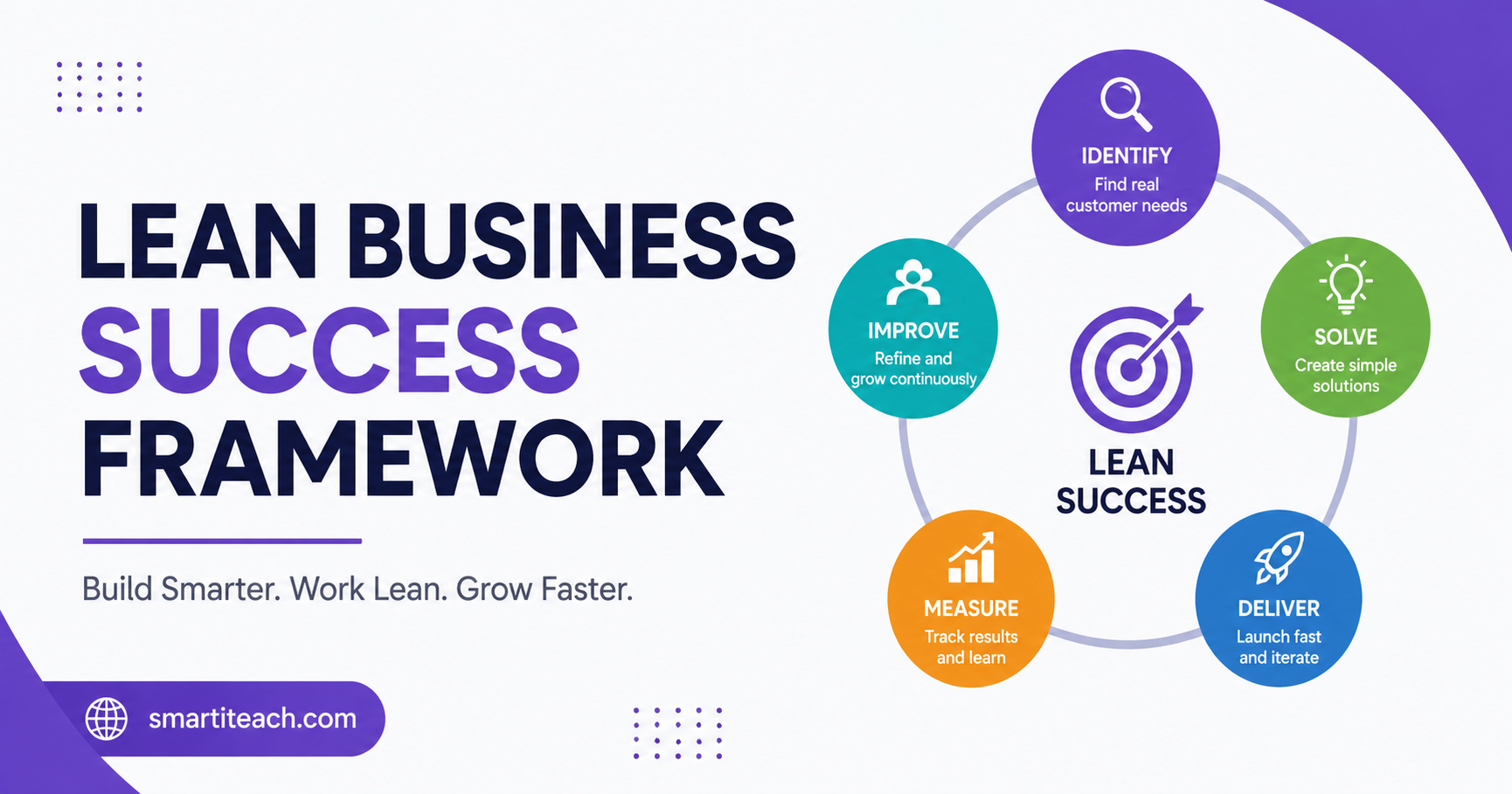
A lean business success framework, at its core, just means testing before you commit. Small batch first. See what sells. Then scale, if it actually deserves scaling. Sounds obvious written out like that, but most businesses don’t do it, not really, because momentum and excitement push people to build the whole thing before anyone’s confirmed it should exist.
The Core Pillars, Sort Of
There’s no single official checklist here different consultants will give you different lists — but a few ideas keep showing up no matter who’s writing the book.
Validated learning. You believe your customers want X. Fine. Prove it, cheaply, before you build the expensive version of X. A software team convinced users wanted a fancy dashboard could mock it up in an afternoon and show ten people, instead of coding for three months and finding out the hard way that nobody clicks the thing.
The build-measure-learn loop. Build something small. Watch what happens. Learn. Repeat. Weeks, not quarters — and honestly the quarters part is where a lot of companies get stuck, because someone signed off on a roadmap in January and won’t touch it again until the annual review, by which point the market’s moved on without them.
Cutting waste. Not layoffs. Waste. The unused software seat nobody remembers subscribing to. The recurring meeting that used to matter and now exists because nobody’s brave enough to cancel it. Extra inventory gathering dust in a storage unit somewhere. Toyota figured this out on car assembly lines decades ago and somehow it still applies to a five-person marketing agency arguing about which project management tool to keep paying for.
Actually talking to customers. Not surveys nobody reads. Actual conversations. A founder who calls five customers a week knows more than one who skims an industry report once a year and calls it market research.
How to Actually Build One
Start with the problem. Not “we want to grow revenue” that’s not a problem, that’s a wish. What specific pain does a specific type of person feel, and how badly do they feel it?
Then build the smallest thing that solves it. Not a bad thing, small doesn’t mean bad — just the leanest version that still works. A landing page and a waitlist can validate more than a finished product sometimes.
Track numbers, real ones. Conversion, retention, whether people come back a second time. Opinions lie. Numbers argue with you, which is uncomfortable but useful.
Then decide: keep going, or change direction. Both are fine outcomes. A pivot isn’t failure, it’s information, even though it feels like failure in the moment, I won’t pretend it doesn’t.
Only once something’s actually working should money go toward scaling it. Scaling something unproven is just building the second bakery location before you know if anyone wants the muffins.
Mistakes I See Constantly
People skip the learning step because waiting is uncomfortable. They’d rather build. Building feels like progress even when it’s the wrong thing.
Feedback that stings gets dismissed as “that person just didn’t get it,” when honestly the painful feedback is usually the useful kind.
Lean gets treated like a project with an end date instead of an ongoing habit, which defeats the whole point.
And people confuse lean with cheap it’s not about spending nothing, it’s about not spending on things you haven’t confirmed matter yet.
Where This Shows Up in Real Businesses
Retailers now run small test batches instead of ordering a warehouse full of a new product line, because unsold inventory is basically money that decided to sit in a box and do nothing.
Hospitals map patient visits step by step looking for where people get stuck waiting turns out a lot of “just how healthcare is” delays are actually fixable bottlenecks nobody had mapped out before.
Software companies, obviously, ship small updates constantly rather than the old model of one giant version release a year. You’ll notice this if you’ve ever had an app quietly change on you overnight.
What to Measure
Skip vanity numbers. A thousand website visitors who leave in four seconds tell you almost nothing. Fifty visitors who actually buy something tell you a lot. Track things tied to money or genuine retention — acquisition cost, how fast a build-measure-learn cycle actually completes, whether people stick around.
Culture Matters More Than the Framework Itself
Here’s the part people skip over: none of this works if your team is scared to admit an experiment failed. If a manager punishes failed tests, people start hiding failures instead of reporting them, and then you’re flying blind, which is the exact opposite of what a lean framework is supposed to prevent.
Leaders who shrug off a failed cheap experiment and say “okay, good, we know now” build teams that actually take smart risks. Leaders who get angry about it build teams that lie about their numbers. I’ve seen both. The difference is obvious within about a month.
Wrapping Up
A lean business success framework isn’t a magic trick and it won’t save a bad idea. What it does is stop you from finding out an idea was bad the expensive way. Small tests, honest numbers, fast pivots. It’s not glamorous. It’s just less likely to end with equipment on Facebook Marketplace.




[…] Markets move fast and companies that respond slowly lose customers to whoever moved first. Costs keep rising too, and raising prices to compensate only goes so far before customers just leave. […]